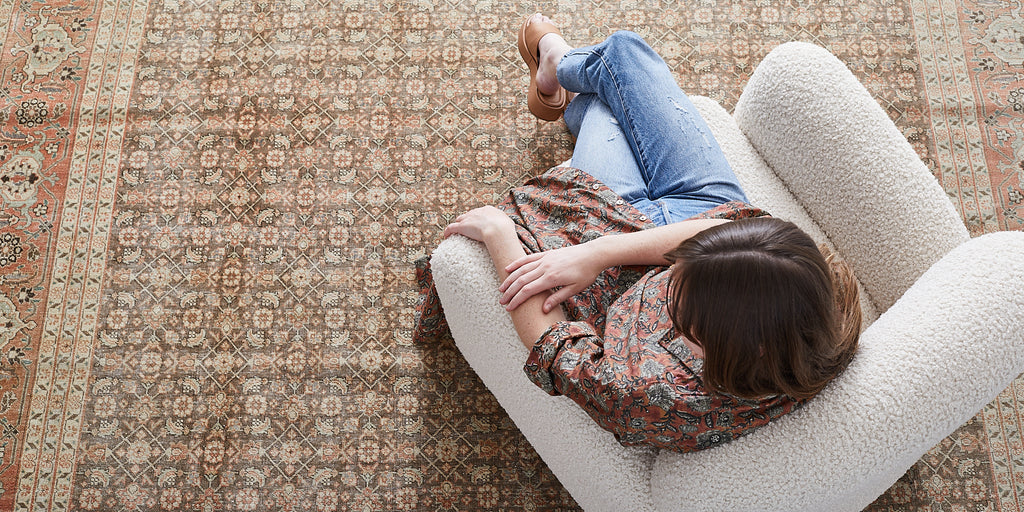
We’re often told to buy more new, but less often told to look at what already exists. In a world that moves quickly, there’s something grounding about choosing a piece that has already lived a life, one that doesn’t ask anything new of the Earth, only a place to land next. Vintage rugs have always existed outside of trend, but below are 5 quiet truths you might have missed about them and their inherent sustainability.

5 Quiet Truths About Vintage Rugs

1. They’ve already been through the hardest part
Vintage rugs have already moved through the most resource-intensive stages of production. The wool has been sourced and spun, the dyes have set long ago and the structure has held through years of use. Nothing new needs to be made to bring one into your home. It is an existing piece being used again, which makes it a more considered alternative to buying something newly produced.

2. They were made with natural materials
Most vintage rugs were made from wool and plant-based dyes because those were the materials available at the time. They were not selected to meet a standard or trend, it was simply what was used during that era. Because of this, vintage rugs avoid synthetic fibers and heavy chemical treatments, offering a more straightforward, organic material composition than newer options for manufactured rugs.

3. They’re built to last for generations
Hand-knotted and handwoven rugs were made for long-term, everyday use. The construction allows the fibers to compress and soften over time without breaking down quickly. Wool in particular has a natural resilience that helps it hold its structure even as the surface evolves. It also contains lanolin, a natural oil that gives wool a level of stain resistance and makes it more forgiving, even in homes with kids and pets. Instead of wearing out, a well-made rug becomes more flexible underfoot and continues to perform as it moves from one space to another. With proper care, it can last for decades while maintaining both function and presence.

4. They boast beautiful, lived-in wear
Signs of wear such as slight color variation, softened edges, or areas of abrasion in higher traffic spots are expected in a vintage rug. Abrasion happens as the surface fibers are gradually worn down through years of use, revealing a lower pile and a more nuanced variation in tone. This process does not weaken the rug’s foundation, but rather it adds to the lived-in look that vintage rugs are known for. That soft patina and visible history is often what makes them more sought after, since it cannot be replicated in new production and reflects how a rug has naturally settled over time.

5. They are inherently sustainable
Vintage rugs are inherently sustainable because they extend the life of something that already exists. There is no new production, no additional raw material sourcing, and no added manufacturing impact required to bring them into your home. Their durability also reduces the need for frequent replacement, which supports a more steady and long-term approach to furnishing your home. Over time, this makes them a more responsible choice for the Earth without requiring any compromise in quality or design.

A vintage rug has already shown its value through years of use. It has held up over time and remained a steady part of the spaces it’s lived in. Bringing one into your home is choosing something with a proven sense of longevity. Rather than starting over with newly manufactured pieces, you’re continuing something that’s already been well made. It’s good for your home and even better for the planet.